Install Tiny Core Linux Vmware Install Template
This video tutorial shows how to install Tiny Core Linux 8.2 and review on VMware Workstation/Player step by step. We'll also install applications such as Nano, LXTerminal, Leafpad, Firefox, VLC Media Player and LibreOffice on Tiny Core Linux.
This tutorial is also helpful to install Tiny Core Linux 8.2 on physical computer or laptop hardware. We also install VMware Tools (Open VM Tools) on Tiny Core Linux for better performance and usability features: Fit Guest Now, Drag-Drop File and Clipboard Sharing.
Virtualmin is a modular system, making it easy for developers to extend functionality, add menu items, and more, through plugins. Many standard plugins are provided with Virtualmin GPL and Virtualmin Professional to provide analytics, revision control management, nginx support, and more. There are two versions of Virtualmin: Virtualmin GPL is a free and the open source version. Virtualmin Pro is a the commercial version of Virtualmin. Follow the below steps to install virtualmin on CentOS 7 and RHEL 7. I will suggest to install Virtualmin on the fresh server to avoid conflict when you start the installation. Note that if you have Virtualmin Professional, the process is a little different (or you have to edit the script to add your serial number and key to the SERIAL and KEY variables). You can retrieve your license information from the 'Software Licenses' on your account page at Virtualmin.com. Virtualmin web hosting control panel for Webmin. No suggested jump to results. 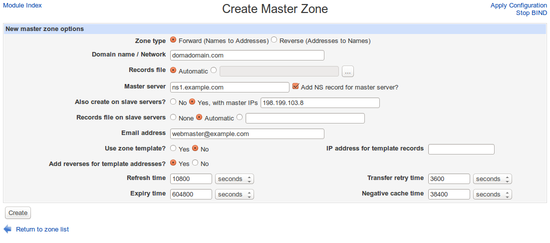 Introduction to Cloudmin GPL. The GPL version of Cloudmin is a designed to manage Xen or KVM instances on only a single host system, rather than supporting multiple hosts and virtualization types as in the full (Pro) version. It lets users try out Cloudmin and virtualization concepts without having to purchase the full package.
VMware and Open VM tools If during the template creation you specified “y” (yes) to the VMware Tools configuration, only a minimal set of Open VMware Tools was installed, because they are running on a Tiny Core Linux machine with a Text-based user interface only. Mar 8, 2017 - In my case, I installed the Ubuntu Server VM with a userid brian. Eve-ng:~# cd /opt/unetlab/html/templates eve-ng:~# cp linux.php.
Tiny Core Linux 8.2 Installation Steps: 1- Create Virtual Machine on VMware Workstation/Player 2- Start Tiny Core Linux 8.2 Installation 3- Install VMware Tools (Open VM Tools) on Tiny Core Linux 4- Installing Nano, LXTerminal, Leafpad, Firefox, VLC Media Player and LibreOffice on Tiny Core Linux 5- Test VMware Tools Features: Fit Guest Now, Drag-Drop File and Clipboard Sharing 6- Tiny Core 8.2 Review Tiny Core Linux Website: Download Tiny Core 8.2 ISO: Hope you found it informative and useful. Any questions or comments are welcomed. PLEASE SUBSCRIBE TO THE CHANNEL ---------------------------------------------------------------------------- Website: Facebook Page: Twitter: Linux Video Tutorials: How to Install Tiny Core Linux 8.2 on VMware Workstation.
When installing, configuring, or managing VMware virtual infrastructure, one of the steps which should be performed before releasing a host (back) to production is to perform operational readiness tests. One test which is quite critical is that of testing virtual infrastructure networking. After all, what good is a running VM if it has no connectivity to the rest of the network? Each ESX or ESXi host pNIC should be individually tested for internal and upstream connectivity, VLAN tagging functionality if in use (quite often it is), in addition to proper failover and fail back, and jumbo frames at the guest level if used. There are several types of VMs or appliances which can be used to generate basic network traffic for operational readiness testing.
One that I’ve been using recently (introduced to me by a colleague) is. To summarize: Tiny Core Linux is a very small (10 MB) minimal Linux GUI Desktop. It is based on Linux 2.6 kernel, Busybox, Tiny X, and Fltk. The core runs entirely in ram and boots very quickly. Also offered is Micro Core a 6 MB image that is the console based engine of Tiny Core. CLI versions of Tiny Core’s program allows the same functionality of Tiny Core’s extensions only starting with a console based system. TCL carries with it a few of benefits, some of which are tied to its small stature: • The minimalist approach makes deployment simple.
• At just 10MB, it’s extremely portable and boots fast. • As a Linux OS, it’s freely distributable without the complexities of licensing or activation. • It’s compatible with VMware hardware 7 and the Flexible or E1000 vNIC making it a good network test candidate. • No installation is required.
It runs straight from an.ISO file or can boot from a USB drive. • Point and click GUI interface provides ease of use and configuration for any user. • When deployed with internet connectivity, it has the ability to download and install useful applications from an online repository such as Filezilla or Firefox.
There are tons of free applications in the repository. As I mentioned before, deployment of TCL is pretty easy. Create a VM shell with the following properties: • Other Linux (32-bit) • 1 vCPU • 256MB RAM • Flexible or E1000 vNIC • Point the virtual CD/DVD ROM drive to the bootable.ISO • No HDD or SCSI storage controller required First boot splash screen.
Nothing real exciting here other than optional boot options which aren’t required for the purposes of this article. Press Enter to continue the boot process: After pressing Enter, the boot process is briefly displayed: Once booted, the first step would be to configure the network via the Panel applet at the bottom of the Mac like menu: If DHCP is enabled on the subnet, an address will be automatically acquired by this point.
Otherwise, give eth0 a static TCP/IP configuration. Name Servers are optional and not required for basic network connectivity unless you would like to test name resolution in your virtual infrastructure: Once TCP/IP has been configured, a Terminal can be opened up and a basic ping test can be started. Change the IP address and vNIC portgroup to test different VLANs but my suggestion would be to spawn multiple TCL instances, one per each VLAN to test because you’ll need to vMotion the TCL VMs to each host being tested. You don’t want to continuously be modifying the TCP/IP configuration: What else of interest is in the Panel applet besides Network configuration? Some ubiquitous items such as date/time configuration, disk and terminal services tools, and wallpaper configuration: The online application repository is packed with what seems like thousands of apps: After installing FileZilla, it’s available as an applet: FileZilla is fully functional: So I’ve only been using Tiny Core Linux as a network testing appliance, but clearly it has some other uses when paired with extensible applications.